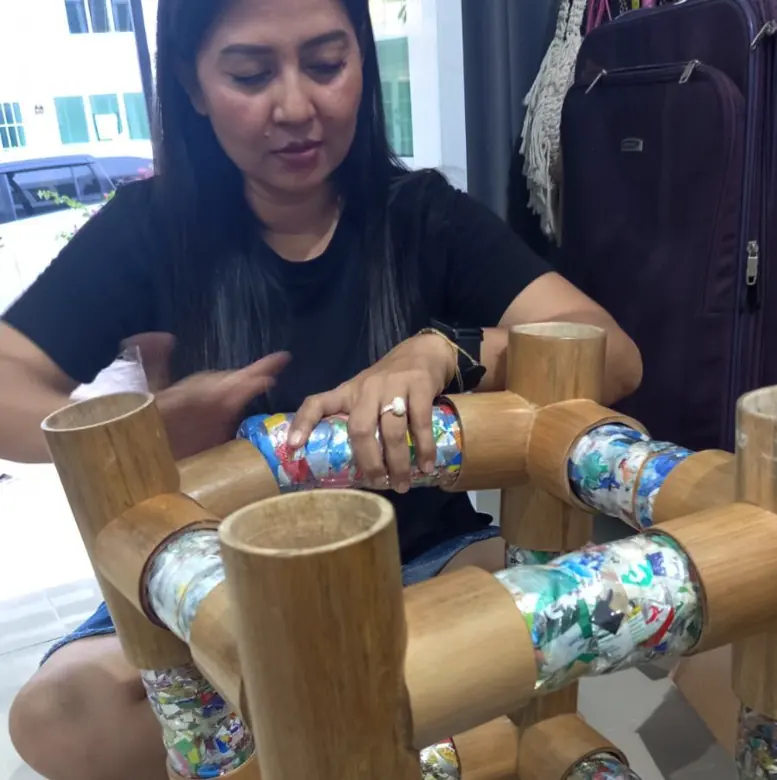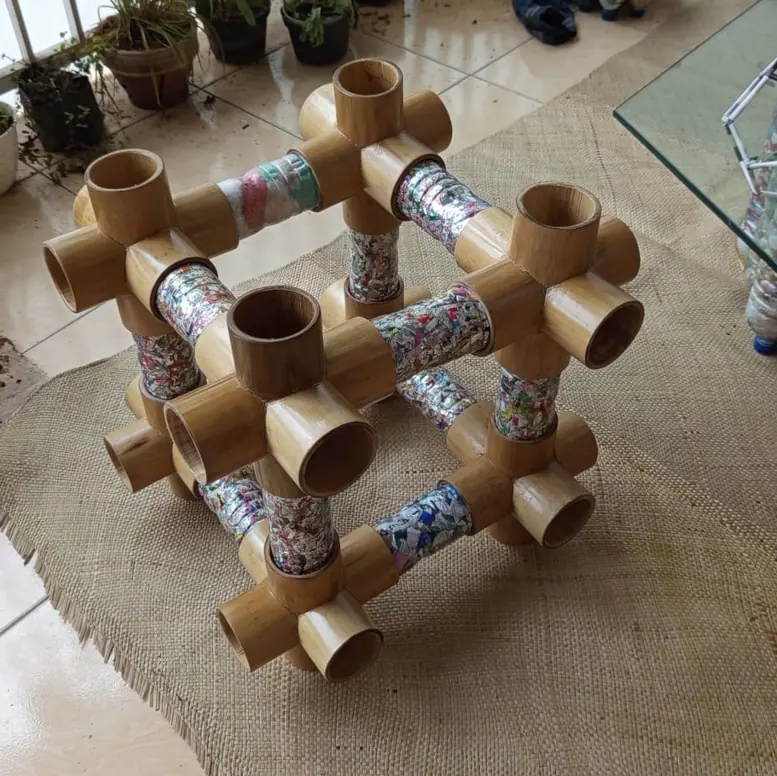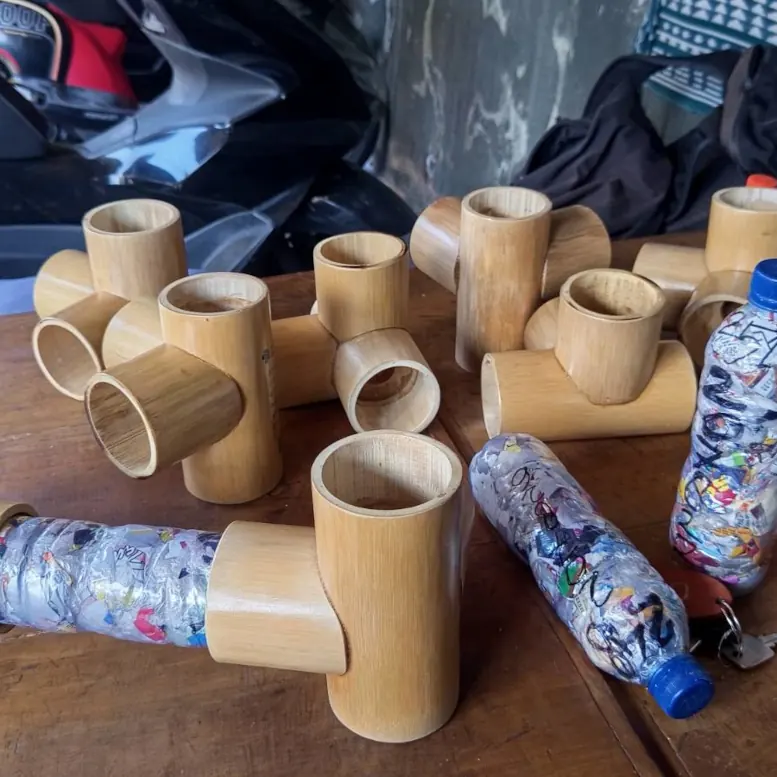
At the heart of Hope Turtle v1 design is an ecojoiner.
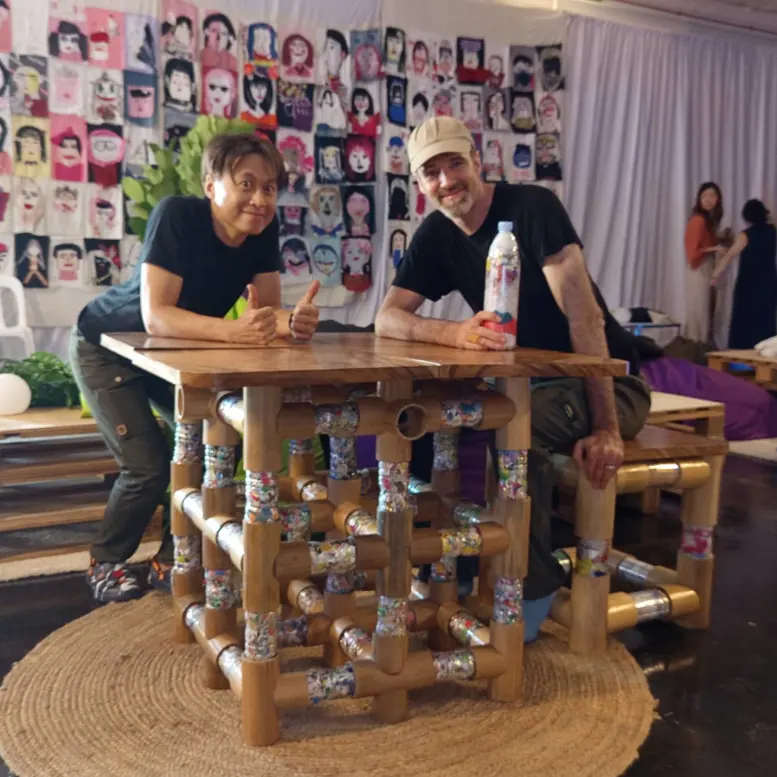
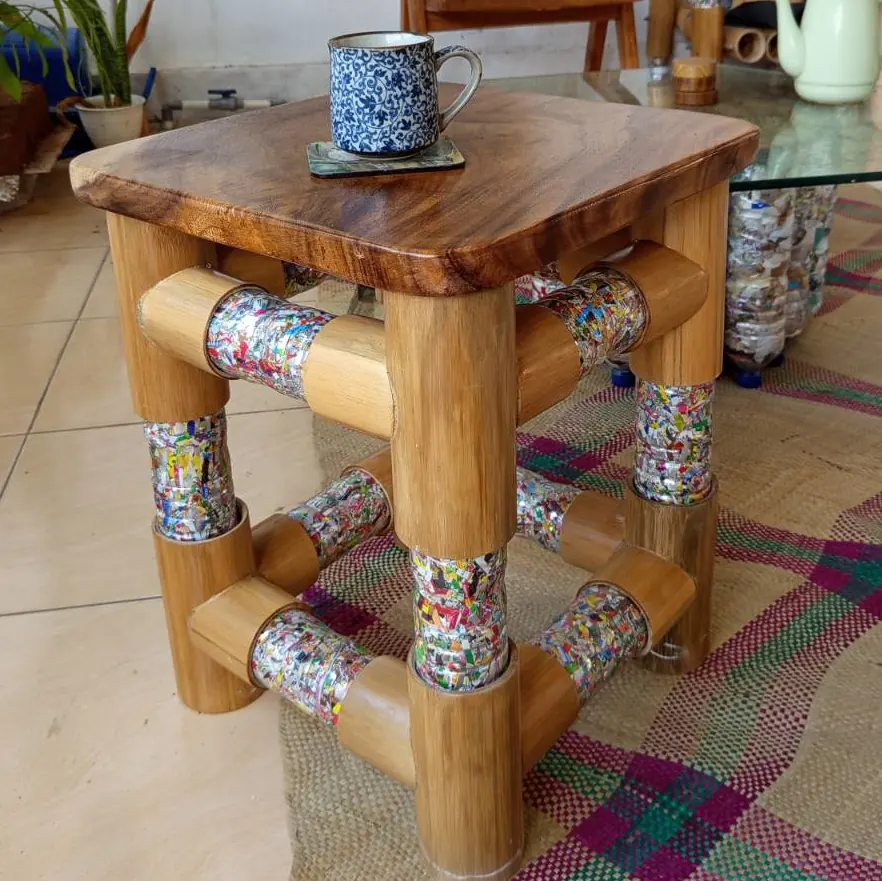
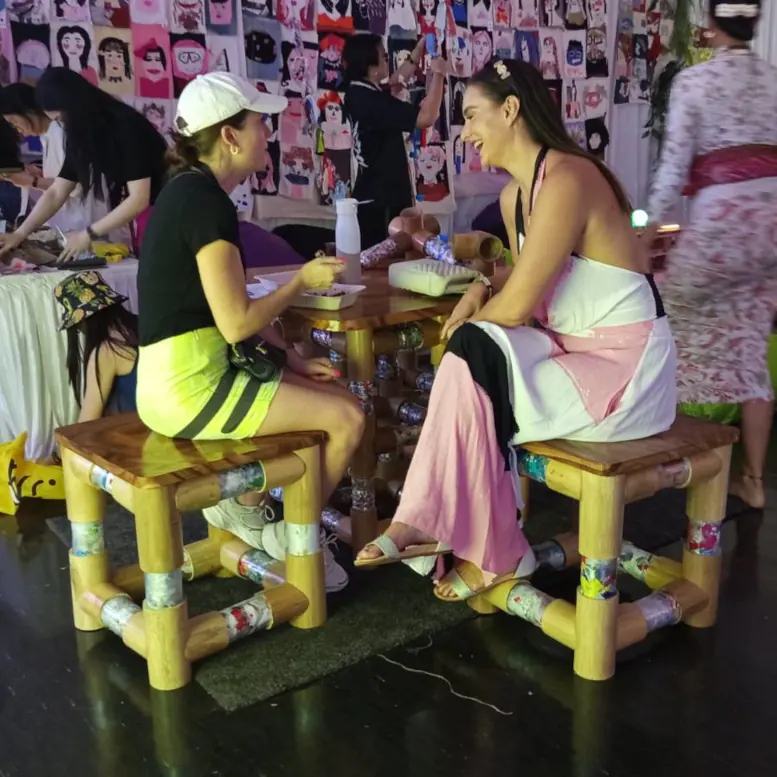
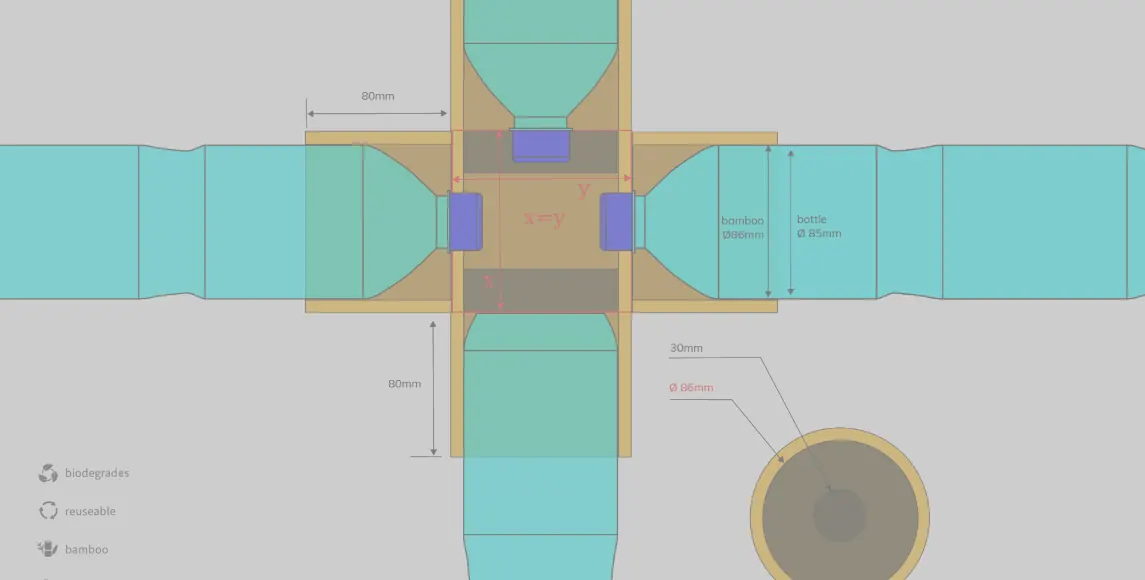
Ecojoiners were developed by the Global Ecobrick Alliance as a means to connect bottles into super-practical cubic matrixes for building modular furniture and structures. Ecojoiners go particularly well with ecobricks — however they can work with any bottle as long as it is nice and full. In this way, bottles and ecojoiners can create cubic chairs, tables, shelves, and all sorts of furniture — and they can also serve as the substructure for earth and ecobrick walls.
Over here at the human2human project, we're putting ecojoiners to use for a whole new purpose: holding a turtle's aid-bottles together! It turns out that PET bottles are also fantastic for containing dry food of all kinds in marine conditions.
Using a single ecojoiner, a Hope Turtle can hold five to six 1.5-litre bottles packed with food. We've tested it — and because bottles seal so well, even in sun and sea, they can preserve their contents for weeks!
Knowing the tides and currents, a simple six-bottle turtle can be deployed to float in to its destination.
Optionally, at the top of the turtle, the sixth bottle can be what we call a control bottle: a cut 1.5L PET bottle that houses our specially designed sail mechanism, microcontroller unit, and power system.
The Global Ecobrick Alliance first tried making ecojoiners out of recycled plastic (failure!), then bamboo (way better!), and finally settled on a design that uses wood slats. Unlike bamboo, wood can be sourced just about anywhere in the world. As long as it's the right size — slats from shipping pallets, plywood, or thin boards — it can be transformed with a band saw into a set of flat slats that assemble into our hexa-cube ecojoiner.
Build your own
Generate a custom ecojoiner spec sized exactly to your bottle and your board:
The original bamboo ecojoiners